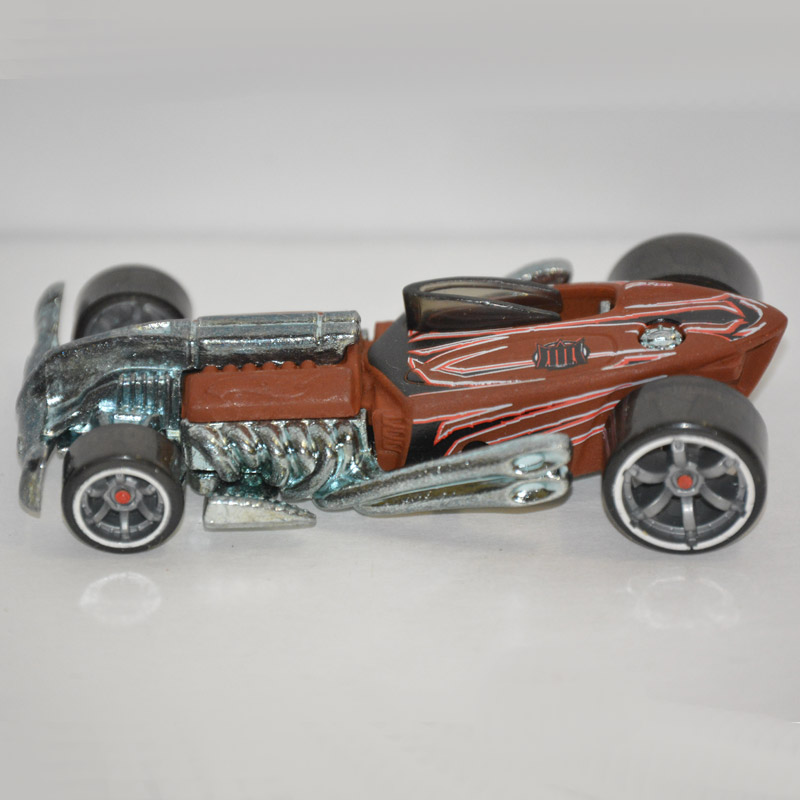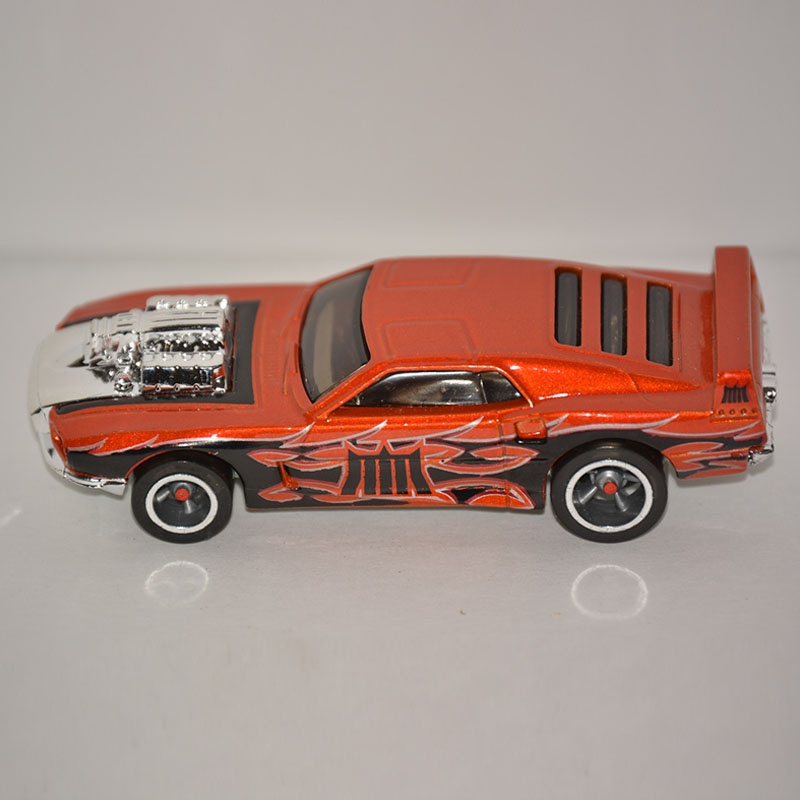
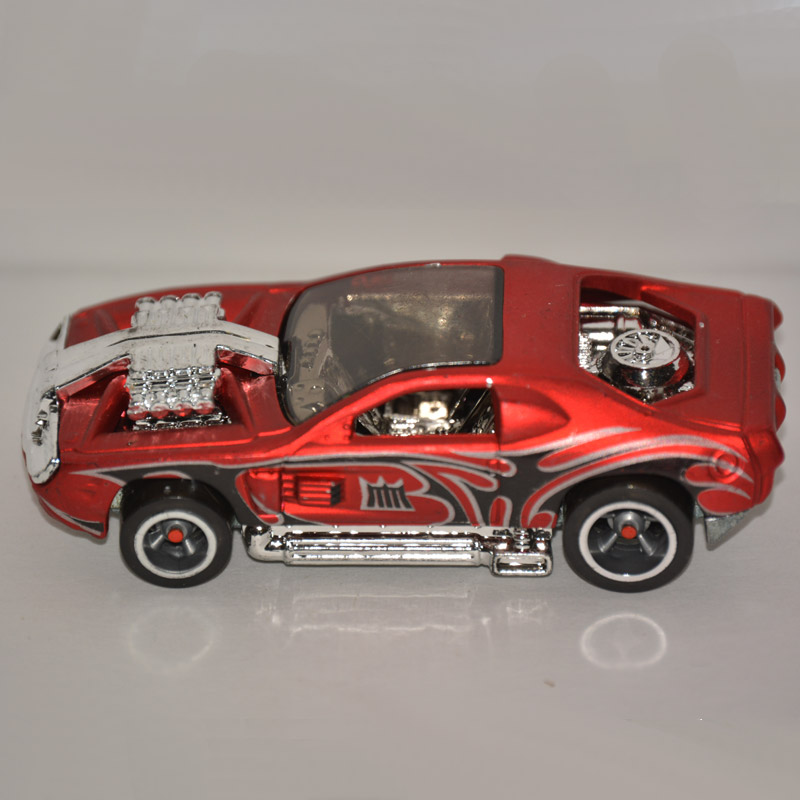
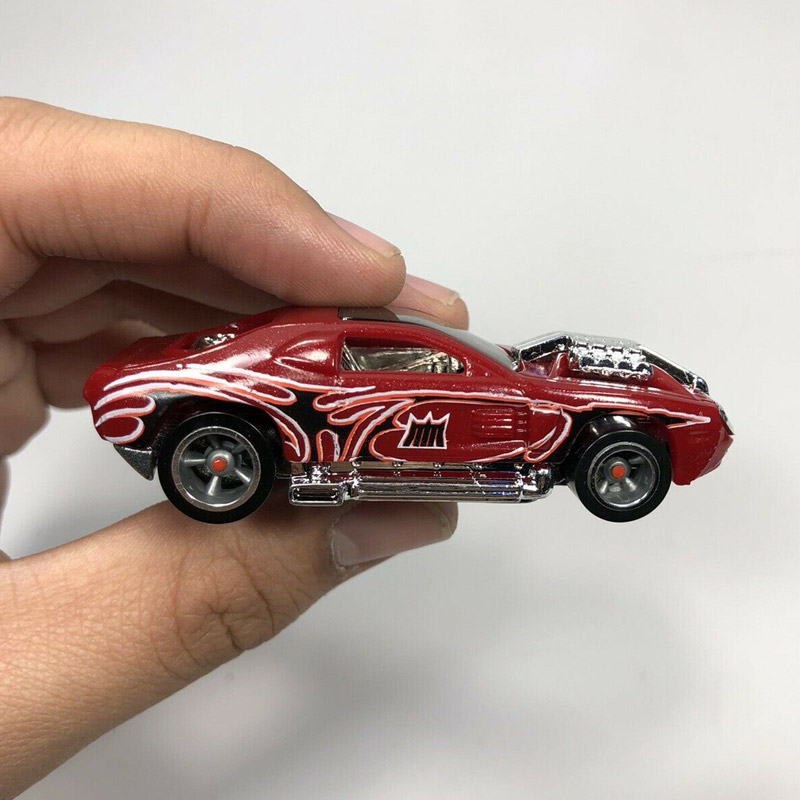

Hot Wheels Hollowback is one of those Acceleracers cars that didn’t need an introduction in 2005. You saw it once and immediately understood what it was built for. Deep red bodywork, black flame graphics, exposed engine, and side pipes that looked more suited to a demolition derby than a race track. This wasn’t a car designed to look fast. It was designed to look threatening, and that distinction mattered in the Metal Maniacs lineup.
Released as part of the original Acceleracers era, Hollowback embodied the Maniacs’ rejection of clean racing and technical finesse. Where Teku cars leaned into balance and control, Hollowback leaned into intimidation and durability. Its exaggerated proportions, aggressive stance, and visible engine weren’t aesthetic choices meant to impress judges or designers. They were meant to project dominance before the race even started.
In the Acceleracers series, Hot Wheels Hollowback was driven by Taro Kitano, a character defined by discipline, strength, and relentless forward momentum. That pairing wasn’t accidental. Hollowback fit Taro’s style perfectly — a car that didn’t rely on tricks or agility, but on resilience and brute force. Within the Metal Maniacs hierarchy, Hollowback represented the bridge between old-school muscle philosophy and the increasingly violent Realm racing that defined the later films.
Hot Wheels Hollowback’s Role in the Acceleracers Universe
Hollowback appeared throughout the Acceleracers storyline as part of the core Metal Maniacs roster, racing through the Realms where survival often mattered more than finishing clean. It wasn’t the fastest Maniac car, and it wasn’t the most refined, but it consistently reflected the faction’s identity: crash through obstacles, absorb punishment, and keep moving forward. That philosophy is exactly why Hot Wheels Hollowback remains one of the most recognizable Metal Maniacs cars among collectors today.
Designed by Phil Riehlman, Hollowback was officially designated as car #5 in the Metal Maniacs crew. Its design leaned heavily into classic muscle car cues exaggerated for the Acceleracers world, reinforcing the Maniacs’ preference for raw power over modern racing trends. For many fans, Hollowback represents the moment Acceleracers fully committed to faction-driven design rather than generic race cars with paint jobs.
Authenticity, Condition, and Shipping
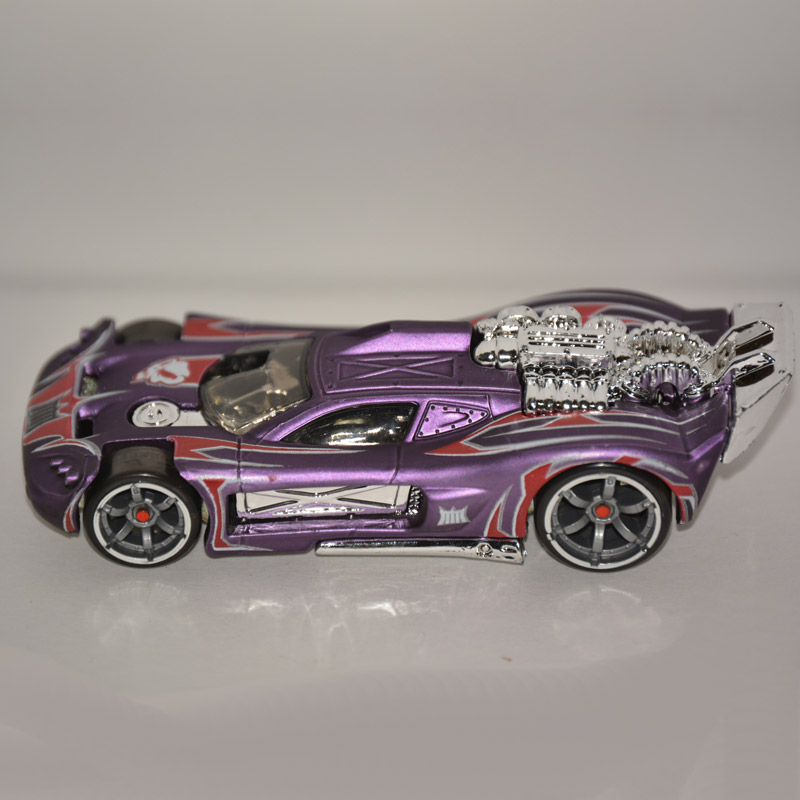
This is a genuine 1/64 scale Hot Wheels Acceleracers Hollowback die-cast produced by Mattel and originally released in 2005. It is an authentic Metal Maniacs release from the original Acceleracers era, not a reproduction, custom, or modern reissue. The car has been removed from its original packaging, stored carefully, and has never been raced or played with. Condition is clean and suitable for display in a serious collection.
This item ships from the United States and is handled domestically. Orders ship within 48 hours via First Class service throughout the U.S. and Canada. International shipping is available, with rates calculated by destination. What you receive is exactly the car described, accurately represented and ready for display.
Why Collectors Still Want Hot Wheels Hollowback
Hollowback isn’t a subtle piece, and it was never meant to be. On a Metal Maniacs shelf, it immediately stands out as one of the most aggressive designs of the Acceleracers era. For collectors focused on faction identity, original lineup significance, and cars that represent the spirit of Acceleracers rather than just its branding, Hollowback is a foundational piece.
It’s the kind of car that reminds people why Acceleracers felt different in the first place — louder, rougher, and unapologetically confrontational. If your collection already leans toward the Metal Maniacs, Hot Wheels Hollowback belongs in it. If it doesn’t, this is often the car that starts that shift.
Taro Kitano was the Metal Maniacs’ backbone—disciplined, relentless, and physically dominant. He didn’t race with tricks or finesse. He powered through Realms by strength, endurance, and an unbreakable will, making Hot Wheels Hollowback a natural extension of his no-nonsense, forward-only racing style.